Posts

Have you ever noticed

that wherever you go,

whatever you do,

your attitude goes with you

and colors your experience?

This is why it is critically important that we raise the level of consciousness from which we are living our lives.

How? By choosing to be conscious and responsible for how we show up in the world instead of just functioning on autopilot.

We come to each moment of our life with a story that we are living in. Through our accumulated experiences we have constructed a signature way of being. There is a fairly predictable way that we will respond to new experiences.

Most of us could benefit from a bit of housecleaning of our fundamental beliefs and the mental and emotional dynamics that define our interior world.

In times of difficulty, self-observation and reflection often reveal that we have been living primarily through the filter of our ego. This means our perceptions have been characterized by:

  • Seeking safety, validation, and control rather than truth, presence, and love.
  • Unexamined unconscious beliefs, fears, and coping patterns that we inherited or developed.
  • Societal training that taught us to measure worth by achievement or perfection rather than the quality of our inner experience.

Here’s an example of stepping into conscious responsibility for the way we show up. My friend, Betty, and I had a falling out over a misunderstanding a few years ago. We each retreated to our own stubborn judgment that the other was at fault. Then, one day we ran into each other in a store. We smiled. We didn’t pretend not to see each other. We said hello. And we began to exchange pleasantries. Without ever explicitly saying so or hashing out the disturbance we had, we invited each other back into our lives. We just had to make caring and kindness more important that our self-righteous points of view.

Life is much more pleasant when we choose to rise above the perspective of our ego. Next time you suspect that you are caught up in a dysfunctional pattern of reaction, ask yourself some good questions like:

  • Is there another way I can look at this situation?
  • What else might be going on here other than my point of view?
  • Given the choice, is this really how I want to respond to this situation?

It helps to remember that we truly live our lives from the inside out. By getting to know ourselves and how and why we make the choices we make, we open up the possibility of upgrading the quality of consciousness we are expressing.


If you are interested in doing some mental and emotional housecleaning, I invite you to book a free 30-minute conversation with me to see if my mentoring services might be a good resource for you.


What Game Are You Really Playing?

The Origins of the Metaphor of Life As a Game

Since the 1600s, great thinkers have used the metaphor of life as a game or performance. Shakespeare famously wrote, “All the world’s a stage, and all the men and women merely players.” This suggests that real people are like actors assuming alternative identities enacting various dramatic, tragic, and comedic scenarios.

Fast forward to 1925, and metaphysical teacher Florence Scovel Shinn gave the metaphor new spiritual significance in The Game of Life and How to Play It. She suggested that life isn’t random but a purposeful simulation through which souls evolve in a cosmic classroom of sorts. Expanding on this idea, some perceive life on Earth to be a simulation through which souls learn by assuming identities that are not ultimate truths but part of a temporary human experience. In this sense  life is intended as a journey in consciousness through which souls learn, evolve, and awaken.

Life As a Game

Much like a game, the journey of a lifetime involves choices, risks, outcomes, and a degree of chance. Indeed, we each make choices that have consequences and inform the possibilities to come.  The game of life is a temporary creative process with a beginning and an end. But, unlike a game, our life, once initiated is not optional. We will live it one way or another, even if we choose to end it prematurely.

What is the Nature of Your Game

If life is a game, what kind are you playing?

Are you:

  • Fighting for survival?

  • Competing for scarce resources?

  • Trying to make your dreams come true?

  • Seeking to expand your conscious awareness?

  • Awakening spiritually?

How would you describe the game of life that you are playing?


Your perception determines your playing field.

The game you see is the game you play. Some games are built around fear and lack. Others are quests for love, awakening, or understanding. Some perceive the games themselves to be hierarchical as in  Maslow’s hierarchy of needs. He theorizes that we must meet our basic survival needs before we can entertain other higher pursuits. As we achieve each level of desire and expertise, we gain the ability to perceive and participate in higher games. But not all of us will. Many are content to live life within the purview of the mind and ego pursuing the temporary sating of perceived material and emotional wants and needs.

 Or perhaps these games are multidimensional, where several “games” play out at once.

Multidimensional Games

I have come to experience myself as a soul pursuing a spiritual learning agenda while living life through the identity of Judith Johnson.

It has been my experience that I participate to some degree in multiple games simultaneously and to varying degrees. But I also notice an overarching trajectory whereby I have been focusing more and more of my attention on awakening my spiritual awareness and the process of transcending into soul awareness and beyond.

This typically requires inquiry beyond what is directly observable or measurable by the mind and senses. It delves into fundamental metaphysical questions about reality, existence, knowledge, the nature of being, consciousness, space, time, and causality.

As I elevate my game, what changes is largely a function of what I perceive to be real and what I value. For example, if I were a pickpocket seeing an angel, I would see pockets and if I were a critic I would look for something to criticize. But as I come to know God, other pursuits lose their pull.

Our difference in perception explains why people at different levels of awareness often misunderstand each other.

One interesting aspect of this multi-level game is that the more restricted our perceptual capabilities are the less we can comprehend or understand someone functioning from a different level of awareness. For example, Joe experiences life through his ego and denies the existence of God because he is looking at the world and asking, “how can a god let this kind of pain and suffering exist?” Through Joe’s eyes, Sam who speaks of experiencing God’s presence and love in his life appears naive. But Joe is making a common error. He is assuming that what he sees is reality itself rather than an interpreted reality perceived from a particular point of view.

One of life’s great lessons is that thinking something doesn’t make it true.

Another is that we assume that others perceive the same thing that we do.

So, What Game Are You Playing?

What do you value in your life? What do you believe is the purpose of your life? What are you seeking to experience or achieve?

Take a moment and ask yourself:

“How would I describe the game of life I’m playing?”
“What deeper game might be calling to me?”

When we begin to ask such questions, we move from being pawns of circumstance to conscious players in a sacred journey.

If you would like to know more about me and my work, please explore my website here.

Do you know someone who might benefit from reading this article?  If so, please share it with them. 

The Metaphor of the Pearl

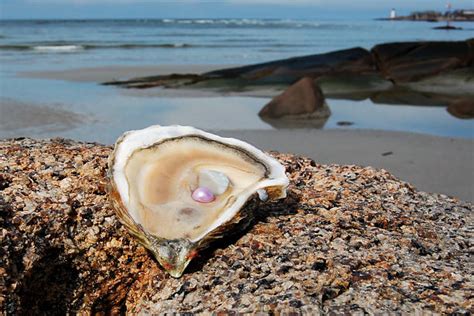
The oyster’s journey of pearl formation is a metaphor for overcoming adversity. Difficult situations can be the source of our greatest blessings and growth if we respond with courage and perseverance.

How and Why the Oyster Forms a Pearl

We tend to activate autopilot defense mechanisms to push away less than desirable experiences. Alternatively, consider how the oyster forms a pearl as a natural defense mechanism against irritants that get inside its shells.

When a foreign object makes its way into the oyster’s shell, it irritates the soft tissue surrounding the oyster’s internal organs. To protect itself, the oyster secretes layer upon layer of a substance called nacre (also known as mother-of-pearl). Slowly encasing the irritant, these secretions form a precious pearl of iridescent luster. 

The Oyster’s 5 Wisdom Teachings

Here’s how the wisdom of pearl formation can be applied in our lives:

Irritants as Catalysts: When we encounter challenges and adversity, we can use them as catalysts for positive change. Just as an irritant triggers the oyster’s response, we can engage in a process of personal transformation rather than trying to push away unwanted experiences. These challenges can teach us new skills of adaptation.

For example, when a relationship becomes unpleasant, seek to understand how the disturbance is being triggered inside of you rather than trying to eradicate the discord. Chances are the nature of the upset for you is probably familiar from past experiences. Use the current situation as a motivation to better understand the origins of this pattern of reactivity inside of you so you can  break free of it.


The Power of Response: The oyster’s response to an irritant involves surrounding it with a protective substance which in turn forms a precious pearl. Similarly, individuals have the ability to choose how to react to adversity. This can be an opportunity for growth.

For example, I recently watched my hot temper rise up in response to a situation where I felt I was being mistreated by a company I was doing business with. I caught myself in the act and took the time to figure out how to respond with simply my point of view and not my anger. That generated a better response than I even hoped for.


Transforming Pain: The oyster transforms the irritant into a pearl. This mirrors how individuals transform painful experiences into valuable lessons and inner strength. Overcoming challenges shapes individuals into stronger, more compassionate, and wiser people.

A client recently had a surprisingly unpleasant encounter with her grown    daughter. Rather than reacting in the moment, she chose to wait till we had a chance to unpack the situation together. We explored the fact that the daughter was being heavily influenced by her husband who had a dislike for my client. Rather than simply reacting to being hurt by her daughter, my client was able to see that she was doing the best she could in a difficult situation. As a result, she gained compassion for her daughter and a greater tolerance of the unpleasantries of life.


Hidden Treasures: The pearl emerges from within the irritant. The most valuable lessons and blessings in life are often within struggles. By persevering, individuals can discover these hidden treasures.

For example, I spent years in an intractable discord with my neighbors. Whenever it erupted, there was an urgency inside of me to get away from them as fast as possible. I finally noticed the depth of my pain was disproportionate to the situation itself. Looking inward, I realized this experience was triggering the feeling associated with an unresolved issue from my childhood. As a child that same feeling had been unbearable forcing me to run away from what was happening. The fear of experiencing that same feeling was being triggered with my neighbors. Once I recognized this, I was able to separate the two situations. I found myself appreciating that the current discord had brought me awareness of my old emotional fear still being active within me. By releasing that buried fear I was able to transform the nature of my relationship with my neighbors.


Embracing Adversity: The oyster must accept the irritant’s presence and work with it. Likewise, individuals must accept adversity as a natural part of life and navigate it with resilience. Embracing challenges provides opportunities for growth.

For example, I struggled with obesity for most of my life. I lived in shame, self-blame, and jealousy of naturally thin people. Finally, an endocrinologist discovered that I have an extremely low metabolism that is the real source of my body weight issues. Knowing that it wasn’t my fault liberated me. I was then able to find solutions that made it possible for me to maintain a healthy body weight and release my emotional baggage associated with this issue.


Life is full of surprises. Remember that pearls of great price are often created through friction. It is wise to build resilience by embracing all of life.


If you would like to know more about me and my work, please explore my website here.

Do you know someone who might benefit from reading this article?  If so, please share it with them. 

Do you experience God? Or, is God a concept to you? Or, perhaps God is not something that matters to you. 

Some people worship very small gods like the god of opinion or the god of money, power, status, and success. Some relate to God as a concept. Others experience God. And some deny the existence of God.

As a mentor and grief counselor, I hear a lot about people’s deepest beliefs and fears. I am particularly fascinated by how a belief in God is expressed in how people live their lives.

What does it mean to believe in God? In its broadest sense, it means having a worldview that includes the existence of God.

Here are three attempts to define God in words:

  • Oxford Dictionary: “In Christianity and other monotheistic religions, the creator and ruler of the universe and source of all moral authority; the supreme being.” 
  • Merriam-Webster Dictionary:The supreme or ultimate reality: such as the Being perfect in power, wisdom, and goodness who is worshipped (as in Judaism, Christianity, Islam, and Hinduism) as creator and ruler of the universe.” 
  • Internet Encyclopedia of Philosophy: “Much of western thought about God has fallen within some broad form of theism. Theism is the view that there is a God which is the creator and sustainer of the universe and is unlimited with regard to knowledge (omniscience), power (omnipotence), extension (omnipresence), and moral perfection. Though regarded as sexless, God has traditionally been referred to by the masculine pronoun.”

I find it interesting that we define God in human terms and with human attributes and aspirations. It is difficult to formulate ideas about God without imagining God to exist in within space and time. We are likely to get caught up in a “Where’s Waldo?” kind of speculation about the placement of God. Is God outside of us and/or within us?  When God is perceived in man’s image and attributed a pronoun, we limit God by our cognitive capabilities and imagination. This line of thinking omits the possibility of a formless and unfathomable God.

Whatever our conception of God may be, it is important to recognize that God is not validated into existence by our belief. 

There are many things that we do not or cannot know. This is the territory of faith, trust, and surrender. Some people lose faith in God when things happen that they do not understand or are unable to comprehend. For example, when a child dies. Some people lose their faith saying, “What kind of a god would let a child die?” Others give up on God because they cannot abide by the hard knocks they have encountered in their lives. They stop believing in God because they have a stronger belief that God has failed them. So, they fire God and declare themselves the god of their life. These gods are way too small.

When someone finds little or no interest in spiritual matters, that does not mean that these dimensions do not exist. As professed by the Delphic Oracle, expressed in the teachings of Dutch Renaissance humanist, Desiderius Erasmus, and carved over the front door of the eminent psychologist Carl Jung —

“Bidden or not bidden, God is present.”

For Jung this statement served to remind those entering that awe of the Lord is the beginning of Wisdom (Psalms 111.10).

Many do not believe in the existence of a creator of this world and all who exist in it. Others recognize a mystical quality to life that awakens and inspires a sense of spiritual mystery and an aspiration to goodness.

My awareness of God is constantly evolving and God remains fundamental to my worldview. My understanding of myself as a spiritual being has evolved from conceptual to experiential.

As a child, I thought of God as a fatherly man in a white robe. He lived on a cloud and ran the whole world. That god, conceived by man, in the image of man, became too small for me. The God I speak of now is not limited by human vocabulary, form, or imagination. I no longer try to conceptualize God, I experience God to be something greater than us that has us. I live with an awareness of God’s presence. 

 As I awakened spiritually, I came to know myself as a soul among other souls having human experiences. In the higher levels of consciousness above my ego, I came to know myself to be an individuated aspect or expression of the divine that cannot be created or destroyed. 

It is interesting to note that in both Greek and Hebrew soul means breath or life.

Now, even my perceived identity as a soul is giving way into the divine as a pervading oneness. I have come to know God as the source of my life, my breath, and my multi-dimensional existence as a soul, body, and consciousness. I experience God as oneness and a creative, purposeful force of all we experience.

The Hebraic name for God, hu, is said to express the vibrational frequency of God in such a way that it causes the soul to yearn to go home to the heart of God.

While I believe that we all are essentially divine beings, it is apparent that we have varying degrees of awareness of that reality. And, when we are not aware of something––it is as though it does not exist for us. And, we function accordingly.

In his book, The Idea of the Holy, German theologian Rudolph Otto ponders how we are to stand in relationship to God. He concludes that we should stand before God in drop jaw awe – beyond words and concepts. When we realize that God is beyond our comprehension, we stand at the edge of our unknowing either in fear or trust, depending on whether we imagine a wrathful or a loving God. 

Unique perspectives of spiritual awareness are activated in different individuals. I believe that one’s level of awareness is perfect for whatever that individual is doing in this lifetime. It is not better or worse than the level of awakening of another person.

I remember two weeks before my mother’s death when she had a profound spiritual awakening. Her relationship to God was upgraded from a conceptual belief in God to knowing experientially that God was breathing her. She urgently wanted everyone in the world to know because, as she explained:

“People will want to live their lives differently.”


If you would like to know more about me and my work, please explore my website here.

Do you know someone who might benefit from reading this article?
If so, please share it with them. 

Until 1997, I had a strong belief in god. When I was a child, my god was the god of The Ten Commandments movie — much like Charlton Heston on a cloud. As I matured, so did my concept of god. My god became less imaginable in the image of a person and more of an invisible force. I always imagined god to be benevolent and capable of awareness of each and every one of us simultaneously. The closest I could come to defining god was love – the experience of two or more gathered in goodness.

Then, one day in March, 1997, I was driving south on the Taconic parkway in New York on my way to work. I hit black ice going 60 mph. I no longer had any control over the direction or speed of the car — I was suddenly a passenger and not the driver. 

My car crisscrossed the road four times, and when it was clear I was about to go down a ravine into a swamp, a voice cried out from my belly saying, “I’m not ready to go yet, so you’ve got to take care of me. Please take good care of me.” In that moment, my car did what a mechanic later told my friend was mechanically impossible — it went into reverse. I hung on to the steering wheel while the car made a complete circle going rear first down the ravine and into the swamp. The trunk of the car was sliced all the way through by the tree that stopped the car. The rear window broke into a million pieces. My earrings and glasses flew off my head, landing in the foot area of the front passenger seat. My seat broke, and I was lying face up under the broken rear window, yet I didn’t have a scratch on me, nor was there any glass in my loose-weave wool coat.

I remember my euphoria when I realized the car had stopped. I touched myself and marveled, “I’m alive!” I sat up, retrieved my glasses, earrings, and briefcase and stepped out of the car into the swampy ground. Each step made a loud, moist, suctioning sound as I lifted each foot. I was in total shock, operating on auto pilot. I walked up to the road where the car that had been traveling behind me had pulled over, and this very nice woman beckoned me into her car to wait for the police and ambulance she had called.

I was taken to the hospital. It was as though everyone else I encountered was somehow different from me. They were all worried about me and making a medical fuss. Meanwhile, inside of me my euphoria grew and grew and grew. I was totally blissed out. I had had a spiritual conversion experience that I will never be able to translate in a meaningful way to another human being. I know that now, but at the time I just kept telling people that god is real. The doctors responded by wanting to treat me for post-traumatic stress. I wouldn’t let them. Through this accident I came to know that god is real beyond a shadow of a doubt. I no longer believe in god as an intellectual concept. I know god through personal experience. My knowledge was and remains irrefutable.

Nothing else has ever mattered so much to me as that wonderful gift I was given in a car accident that totaled my car to such a degree that the mechanic automatically offered his condolences to my friend who came to retrieve my belongings. He was incredulous when she told him I was home eating a turkey sandwich. To this day I recall the euphoria and the sense of a glass dome covering my body as the car crashed.

My mother and I were very close, and she shared my deep belief in god, but it wasn’t until two weeks before her death in 2012 that she also was given the gift of knowing god through personal experience. For her, it happened during a breathing treatment. She could barely speak at the time, but told me that she realized that god was breathing her. Like me, she was totally euphoric. That whole day she kept telling everyone who came into her room that god is real. Unfortunately, they all responded to what they thought was an elderly woman on morphine. I guess if you haven’t had the experience yourself, you have no frame of reference. All day, my mom kept asking me when they were going to make the announcement. “Who? What announcement?” I asked. The three most important people in the world she told me. I only remember two of them – the president and the pope. She was urgent about the need for them to let the world know that god is real. “People will want to live their lives differently.” she said.

Have you had an experience like this? If so, I would love to hear about it.