There is a moment when life as you know it ends.

It might come in a phone call. A diagnosis. A doctor walking into the room.
One sentence, and everything changes.

An email I received from a reader provoked this article. She wrote

“I’m 50 years old, sitting in a hospital room with my 43-year-old husband, who is trying to recover from surgery for esophageal cancer. His diagnosis in early March sent me into a tailspin, triggering many unresolved fears that I have around the concept of mortality.”

Most of us don’t know what to say, what to do, or how to comfort one another. We never learned how because we live in a society that treats death as a taboo subject.

Like a soldier having a first experience under fire in battle, nothing prepares you for the thoughts, feelings, and devouring experience of facing your own brink of death or that of a loved one.

Here are five sanity-saving and powerful keys to coping well when critical illness or death catches you by surprise.

Acknowledge and Accept What Is Happening

Trying to pretend things are other than how they are only delays the inevitable. Reality does not bend to our resistance. And the only moment in which we have any power at all is the one we are standing in now.

At some point, we are called to face the truth directly and settle into it, even when every part of us wants to turn away.

Pay attention not only to the news you are receiving, but to what is happening inside of you as you take it in.

Bear witness to your inner experience. Are you shocked? Angry? Numb? Unable to listen? In denial? Grasping for some other explanation that would make this not real? These are all natural human responses. But they are not a steady place from which to respond.

Acceptance is often misunderstood. It is not about liking what is happening or approving of it. It is a conscious choice to stop fighting reality and to meet this moment as it is.

When we stop resisting, something shifts. We become more available, more receptive, more able to respond to what is actually here, rather than what we wish were true.

Don’t Critique Your Own Behavior

It is not uncommon to be critical of your own ability to face the rigors of critical illness and death, whether it is your own or that of a loved one.

Try not to measure yourself against some imagined standard of how you “should” be thinking, feeling, or behaving. Stay grounded in the truth of how it actually is for you, and meet yourself there with as much kindness as you can.

Give yourself permission to not have it together. You may feel overwhelmed mentally, physically, or emotionally. This is unfamiliar territory, and you do not have a reference point for what is normal.

Let your thoughts and feelings move through you. When they are pushed down, they build pressure and eventually surface in ways that are harder to manage. Let yourself feel what you feel without turning it into something that is wrong.

If you are the caregiver, you may feel guilty for tending to your own needs while someone you love is suffering. This is a very human response.

But you can only give from what you have. When you are depleted, it is natural for resentment, anger, or self-pity to arise. These feelings are not a failure. They are signals that something in you needs care and attention.

If you find yourself struggling to cope, reach out for support. Seek someone who can be present with you in an honest way and who has experience navigating illness, dying, and grief.

Don’t Attempt to Protect Others from the Truth

It can be tempting to believe that you are protecting someone by shielding them from a difficult truth. But often, what looks like protection is rooted in fear and an attempt to manage what feels unbearable.

When we soften or avoid reality, we may take away another person’s opportunity to meet the moment in their own way. We step in between them and their experience.

Honesty, even when it is painful, creates the possibility for real connection. It keeps the door open for genuine, intimate exchange.

Telling the truth respects the other person’s capacity to cope. It allows both of you to meet what is happening together, rather than standing apart in separate versions of reality.

Maintain Mindfulness

Moments of serious illness or the approach of death can feel disorienting. Time may seem to slow down and speed up all at once.

There can be a sense of stepping outside of ordinary life, while at the same time being flooded with constant demands and decisions.

It is natural for the mind to react with denial, shock, anger, or withdrawal. These are common ways we try to protect ourselves from what feels overwhelming.

In the midst of this, gently bring yourself back to the present moment.

Simple questions can help anchor you in the moment. “What is the most loving thing I can do for myself right now?” “How do I actually feel?” “What is needed here?”

If you are navigating an ongoing illness or hospitalization, consider keeping a simple daily record of what is happening. Note what is occurring medically, as well as what you are observing emotionally and mentally. Over time, this can offer clarity and a deeper understanding of the experience as it unfolds.

Supporting the Caregiver

There is often one person who becomes the primary caregiver. If that is you, it is important to recognize that you are carrying a great deal.

It is easy to place all of your attention on the needs of the person who is ill and to set your own aside. You may even feel that you should.

But caring for someone else does not mean abandoning yourself.

Your well-being matters. Not only for your own sake, but because it directly affects your ability to be present and supportive.

Allow yourself moments of rest. Accept help when it is offered. Speak honestly about what you need. This is not selfish. It is part of sustaining yourself through a demanding and often emotional role.

Staying Present 

We do not have control over when or how life will confront us with illness or death. These moments often arrive without warning, altering everything we thought was certain.

What we do have is the ability to influence how we meet what is here.

We can choose, again and again, to return to the present moment. We can respond with as much honesty, compassion, and steadiness as we are able.

You do not have to do this perfectly. You only have to do your best, one moment at a time.


What if the way we protect ourselves is also what keeps us from feeling fully alive?

For many years, I found myself saying, “If I were queen…” whenever I felt frustrated with the way people behave and the way the world works. This was long before “No Kings” became a thing.

I objected to so many things. Selfishness. Greed. Deception. Violence. Irresponsibility. Betrayal. Ignorance. Corruption. Incompetence. Apathy. Denial. Lying. Cheating. Stealing. I could go on and on. Whenever I observed or experienced these things, they stirred something deep within me. A sadness that felt ancient. A rage that simmered just beneath the surface.

Over time, that sadness and rage built to the point where I felt the need to protect myself from further hurt. It took me a long time to realize that I was living my life as if I had both arms extended out in front of me like stop signs. Somehow, I had come to believe that I needed to keep everyone and everything at arm’s length so no one could hurt me.

But that way of living came at a cost.

Have you ever noticed yourself doing something like this?

Learning Vulnerability

Then I began to understand the power of vulnerability not as a concept, but as a lived experience. I discovered that vulnerability is not weakness. It is the doorway to truth, connection, and freedom.

I came to see that in protecting myself from being hurt, I was also preventing myself from being known. In hiding, I cut myself off from love, belonging, and inner peace. I may have appeared strong on the outside, but something essential within me remained untouched.

Little by little, I practiced vulnerability and dissolved that barrier. Vulnerability asked something different of me. I needed the willingness to be seen as I am, without trying to manage how others might perceive me. I needed to tell the truth of my experience, even when that truth was imperfect, uncertain, or tender.

This became an entirely new way of being for me. It was as though I was rewiring my energy flow. Instead of having my discontent automatically flow into sadness, rage, and self-protection, I was consciously choosing to let down my guard and let life in.

A Different Way of Being

I found myself standing in reality rather than in my ideas about how life should be.

Something fundamental began to shift. The tectonic plates of my life were moving. My goal was no longer to sanitize my life of pain or discomfort. Of course, I still preferred ease over suffering, but not at the expense of closing myself off from what life had to teach me.

As I listened more deeply within, I found a different kind of truth and stability. It was not based on control, but was rooted in presence. I began to move out of fear and resistance and into a quiet sense of aliveness and wholeness as I learned to participate in my life.

I discovered how to harvest the wisdom hidden within some of my most difficult experiences. And I noticed that the more I was willing to lift my view above my preferences and judgments, the less I found myself resisting reality. In place of my objections came acceptance, cooperation, and understanding.

This is the hero’s journey of my life.

It is about learning to fully inhabit being me. And meeting life as it is, while doing the best I can to care for my own well-being no matter what unfolds. I no longer need to run away from my life or try to change it. I need to live it. I need to be at home right inside myself.

And when I still catch myself slipping into “If I were queen,” I smile and breathe into whatever it is that is scaring me. I remind myself that I am not here to rule the world. I am here to meet it, and to help others do the same.

There is nothing wrong with wanting the world to be better. The question is what it costs us when we resist the one we are actually living in.

Understanding my own life’s journey has deepened what I have to offer through my mentoring and writings. I call this approach the Consciousness Ecology Method™️. It is designed to help us navigate the beautiful, sacred messiness of being human.

If something in this speaks to you, you are warmly invited to explore this work more deeply here.

Do you ever get red hot mad at someone?

I used to call it my Irish temper. Over time, I came to a deeper understanding of what is actually happening when my emotional reaction is disproportionate to the situation at hand.

Here’s an example.

One day I was meeting a friend for coffee. At the appointed time, I received a text saying she would be 15 minutes late. I felt annoyed.

The dialogue in my head was immediate. “Well, she certainly knew before now that she was going to be late. Why didn’t she tell me sooner?”

I waited.

Fifteen minutes later, another text arrived. She was still 15 to 20 minutes away. Now I was livid.

She offered an explanation for the delay. But it did not address the nature of my upset. I was enraged.

How dare she.

How dare she what?

How dare she not acknowledge that her behavior had an impact on me.

How dare she not care about me.

I considered her one of my closest friends. It was unbearable for me to experience what felt like evidence that I did not matter.

I raged on for days.

Clearly, this was not about her being late for coffee.

At some point I began asking deeper questions about what was really happening inside of me.

This was a pattern I had engaged in for much of my life. Whenever that inner distress was activated, I pushed the energy outward in judgment. I blamed someone else each time. It worked in the short term. But the next trigger would come, and the cycle would begin again.

What needed attention was not my friend’s lateness. It was the raw, unresolved emotions I had been deflecting through my judgments for years.

When I discovered the origin of this pattern, something shifted.

What I did not want to know was that, as a young child, I never felt like I mattered enough to anyone.

I could not bear to know that.

I never felt fully safe in the sense that someone was reliably attentive to my needs. That terrified me at the time. I knew I could not take care of myself yet.

Those feelings lived on like a raw nerve. Without my awareness of their source, they ignited viscerally whenever I experienced someone close to me as not caring.

On the surface, I functioned well. I navigated life and relationships competently. But underneath, this autopilot reaction remained a live wire fear. I needed to update my perception of my own capacity to take care of myself now.

When I finally traced this pattern to its origin, something shifted.

I saw that my agitation was an attempt to protect myself from moving closer to the edge of what I had long been avoiding. It was the activation of a preverbal memory stored deep in my body. When it first occurred, I had no words and no comfort. So later, I had difficulty naming it.

Understanding this brought a profound sense of healing and freedom.

So let me ask you.

Do you have disproportionately intense reactions when someone disappoints you?

If so, the next time you feel triggered, consider following the energy inward rather than projecting it outward in judgment.

Yes, the other person may be behaving in ways you do not like.

Yes, they may have done it before.

Yes, you may have asked them not to do it again.

And yet, here they are showing you who they are in this moment.

Deal with that. Set boundaries if needed. Make decisions if you must.

But first, bring your loving attention to the part of you that is in distress.

Simply acknowledging that your upset lives inside you is the doorway to true healing.

If this pattern feels familiar to you, consider putting your arm around yourself and exploring the true source of your distress.

Here are some questions that can help:

  • What behavior currently triggers you to react with intense judgment?
  • What is the specific judgment you are making?
  • What is the actual feeling underneath your reaction?
  • When have you felt this before?
  • What were you afraid might happen back then?
  • What feeling were you trying not to feel?
  • Why did it feel unbearable at the time?
  • Are you truly at risk now, or is this an outdated fear activating on autopilot?
  • If you are at risk, what can you do today that you could not do then?
  • If you are not at risk, what would it take to release this old fear?

Our judgments are rarely about the present moment. They are often guardians standing at the door of old pain.

When we are willing to look beneath them, they can lead us home to the places inside us that are still waiting to feel safe, seen, and strong.

If you find that some of those places feel difficult to explore on your own, you do not have to do this work alone. I offer One-on-One Mentoring for those who would value steady and thoughtful support in untangling old patterns and strengthening their inner ground.

Schedule a complimentary conversation.

Judith

Have you ever noticed

that wherever you go,

whatever you do,

your attitude goes with you

and colors your experience?

This is why it is critically important that we raise the level of consciousness from which we are living our lives.

How? By choosing to be conscious and responsible for how we show up in the world instead of just functioning on autopilot.

We come to each moment of our life with a story that we are living in. Through our accumulated experiences we have constructed a signature way of being. There is a fairly predictable way that we will respond to new experiences.

Most of us could benefit from a bit of housecleaning of our fundamental beliefs and the mental and emotional dynamics that define our interior world.

In times of difficulty, self-observation and reflection often reveal that we have been living primarily through the filter of our ego. This means our perceptions have been characterized by:

  • Seeking safety, validation, and control rather than truth, presence, and love.
  • Unexamined unconscious beliefs, fears, and coping patterns that we inherited or developed.
  • Societal training that taught us to measure worth by achievement or perfection rather than the quality of our inner experience.

Here’s an example of stepping into conscious responsibility for the way we show up. My friend, Betty, and I had a falling out over a misunderstanding a few years ago. We each retreated to our own stubborn judgment that the other was at fault. Then, one day we ran into each other in a store. We smiled. We didn’t pretend not to see each other. We said hello. And we began to exchange pleasantries. Without ever explicitly saying so or hashing out the disturbance we had, we invited each other back into our lives. We just had to make caring and kindness more important that our self-righteous points of view.

Life is much more pleasant when we choose to rise above the perspective of our ego. Next time you suspect that you are caught up in a dysfunctional pattern of reaction, ask yourself some good questions like:

  • Is there another way I can look at this situation?
  • What else might be going on here other than my point of view?
  • Given the choice, is this really how I want to respond to this situation?

It helps to remember that we truly live our lives from the inside out. By getting to know ourselves and how and why we make the choices we make, we open up the possibility of upgrading the quality of consciousness we are expressing.


If you are interested in doing some mental and emotional housecleaning, I invite you to book a free 30-minute conversation with me to see if my mentoring services might be a good resource for you.


Most of us move through life without realizing that we are walking one of two very different inner landscapes. One feels confusing and full of pressure. The other invites us inward toward clarity and peace. These two landscapes are the maze and the labyrinth, and understanding the difference can change the way we meet ourselves and our daily lives.


                             Maze                                                                 Labyrinth

A maze is designed to confuse. It has dead ends, sharp turns, and constant choices that leave us wondering which way to go. When we live from the ego, life feels like this. We chase outcomes, try to please others, and search outside ourselves for the feeling of arrival that never comes. The maze reflects the exhausting cycle of trying to get life right. It is full of striving, second-guessing, and the inner chatter that tells us we are not there yet. The ego thrives in this restless place because it keeps us looping through old habits and unexamined beliefs.

A labyrinth is very different. It has only one path that gently leads us to the center and then guides us back out again. There are no wrong turns. No puzzles to solve. Instead of demanding strategy, it asks for presence. Walking a labyrinth mirrors the experience of living from the soul. We slow down, breathe, and allow ourselves to be guided by an inner wisdom that does not rush or confuse. The labyrinth reminds us that the journey within has already been laid out. Our task is not to fix, control, or conquer. It is to listen, receive, and trust the unfolding.

Metaphorically, the maze represents the chaos of external living. It is the reactive life shaped by old fears, unmet needs, and the belief that happiness lies somewhere outside ourselves. The labyrinth represents the journey home. It invites us to return to our true center where clarity replaces confusion, peace replaces striving, and inner authority replaces the need for outside validation.

When we recognize which landscape we are walking, our choices become clearer. If we find ourselves in a maze of stress and self-doubt, we can pause and remember that another way is available. We can shift our attention inward, breathe more fully, and choose the path of the labyrinth. This simple shift reconnects us with our own stillness and with the deeper wisdom that is always guiding us home.

Life will continue to offer twists and turns, but the way we walk them is up to us. The maze keeps us searching. The labyrinth brings us back to ourselves.

If this speaks to you

You might consider exploring mentoring with me where I can share the Five Pillars of  Consciousness Ecology™️ with you.
These tools help you shift from the maze of old patterns into the quiet clarity of your own truth.

Book a complimentary 30 minute session here:

Childhood Summers in the Waves

When I was a child, we spent two weeks at the ocean every summer. Those days were filled with endless hours body surfing and jumping waves.

That was my first experience of being thrilled with fear. Every time a huge wave rolled toward me, I strategized whether I should try to ride over it, duck into it, or ride it to shore. The ocean always demanded a choice. Just like life.

The Wave That Took Me Under

My biggest, scariest wave appeared one afternoon. I felt sure I could make it over before it crested. But that wave had other ideas. It scooped me up, spun me like a rag doll, and pulled me down into a frothy, tumbling world where I could not tell up from down.

I was thrown ashore landing between the legs of a plump woman standing at the water’s edge. She screamed picking my head up by my hair. I screamed right back as she dropped me into the receding ocean. I stumbled ashore, caught my breath and bearings, and headed back for my next wave.

What the Ocean Was Trying to Teach Me

The ocean taught me something that day. It taught me that life will always roll toward us with challenges that do not ask our permission. Some will thrill us. Some will scare us. Some will shake us so deeply that we don’t have a clue which way is up. But each one gives us a choice about how to respond.

Do we freeze? Do we fight? Do we surrender? Or do we find the courage to rise, breathe, and meet the next wave with a little more wisdom than we had before.

Fear and Delight Are Often Companions

The ocean taught me that fear and delight often arrive hand in hand. And both are valuable experiences that help us learn how to better understand and meet what comes forward in our lives.

Resilience Grows Each Time We Stand Up

It taught me that resilience grows every time we stand up again. And sometimes the most courageous thing we can do is simply walk back into the surf knowing how vulnerable we are.

If You Are Facing Your Own Waves

If you are navigating challenges of your own and want support, I would love to help. Together we can explore what is stirring or feels out of sync, untangle old patterns, and help you create a life that fits you from the inside out.

I invite you to schedule a free thirty-minute conversation with me.


Do you ever experience an elusive unease and longing

for something more than your life seems to be offering you?

Consider it a call to a deeper awareness of the existential reality of the human experience.

There comes a time in many lives when, no matter how much we achieve, acquire, or understand, something inside remains unsettled. It isn’t depression, nor is it simple boredom. It’s a quiet, persistent unease, a sense that something essential is missing, even when life looks full.

That’s what I call existential restlessness. It’s not something that is wrong and needs to be fixed. Rather, it is a sacred signal from your soul. It is a stirring beneath the surface of your ordinary life.

You may have checked every box the world has told you would bring you happiness. But that kind of happiness is short-lived.

You were never meant to find lasting peace in what is fleeting.

Living in a world where your awareness has been dominated by the ego’s focus on survival, achievement, and identity, the deeper self is beginning to ache for reconnection with truth, purpose, and unity.

You might find yourself thinking, “Why doesn’t anything truly satisfy me for long?” That is a sign that your consciousness is trying to awaken and remember that it is more than a personality navigating a world of roles, possessions, and expectations. Here are some of the ways existential restlessness expresses itself:

  • A feeling of emptiness even when life looks “successful” from the outside
  • A recurring sense that something important is missing
  • Difficulty finding lasting fulfillment in relationships, work, or possessions
  • A yearning for meaning, authenticity, or a deeper connection with life
  • A vague sadness or discontent that has no clear cause

This inner unease is one of life’s most powerful motivators for growth. It propels us to question the assumptions that shape our existence and to search for a more enduring sense of peace.

This can feel uncomfortable, but it is profoundly purposeful. It is the soul’s invitation to shift your identity from the temporary self to the eternal self.

It’s the same force that compels a seed to break open before it can grow, or a caterpillar to become a butterfly. Those things such as our stories, ambitions, and attachments that once defined us no longer fit the shape of who we are becoming.

When we turn towards this process with curiosity and humility, the ache softens. It becomes a teacher, guiding us beyond striving toward presence, beyond doing toward being. Surrender and listen deeply. The peace you seek is not found by adding more to your life, but by allowing yourself to rest more deeply in life itself.

If you are experiencing existential restlessness and think you might benefit from working with a mentor, feel free to schedule a free half hour meeting with me to see if we might be a good fit. Schedule your free session here.

If you are experiencing existential restlessness and think you might benefit from working with a mentor, feel free to schedule a free half hour session with me to see if we are a good fit.

Schedule your free session here.

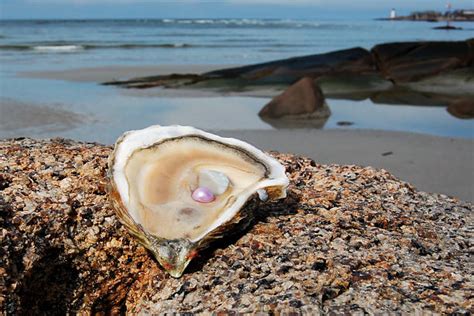
The Metaphor of the Pearl

The oyster’s journey of pearl formation is a metaphor for overcoming adversity. Difficult situations can be the source of our greatest blessings and growth if we respond with courage and perseverance.

How and Why the Oyster Forms a Pearl

We tend to activate autopilot defense mechanisms to push away less than desirable experiences. Alternatively, consider how the oyster forms a pearl as a natural defense mechanism against irritants that get inside its shells.

When a foreign object makes its way into the oyster’s shell, it irritates the soft tissue surrounding the oyster’s internal organs. To protect itself, the oyster secretes layer upon layer of a substance called nacre (also known as mother-of-pearl). Slowly encasing the irritant, these secretions form a precious pearl of iridescent luster. 

The Oyster’s 5 Wisdom Teachings

Here’s how the wisdom of pearl formation can be applied in our lives:

Irritants as Catalysts: When we encounter challenges and adversity, we can use them as catalysts for positive change. Just as an irritant triggers the oyster’s response, we can engage in a process of personal transformation rather than trying to push away unwanted experiences. These challenges can teach us new skills of adaptation.

For example, when a relationship becomes unpleasant, seek to understand how the disturbance is being triggered inside of you rather than trying to eradicate the discord. Chances are the nature of the upset for you is probably familiar from past experiences. Use the current situation as a motivation to better understand the origins of this pattern of reactivity inside of you so you can  break free of it.


The Power of Response: The oyster’s response to an irritant involves surrounding it with a protective substance which in turn forms a precious pearl. Similarly, individuals have the ability to choose how to react to adversity. This can be an opportunity for growth.

For example, I recently watched my hot temper rise up in response to a situation where I felt I was being mistreated by a company I was doing business with. I caught myself in the act and took the time to figure out how to respond with simply my point of view and not my anger. That generated a better response than I even hoped for.


Transforming Pain: The oyster transforms the irritant into a pearl. This mirrors how individuals transform painful experiences into valuable lessons and inner strength. Overcoming challenges shapes individuals into stronger, more compassionate, and wiser people.

A client recently had a surprisingly unpleasant encounter with her grown    daughter. Rather than reacting in the moment, she chose to wait till we had a chance to unpack the situation together. We explored the fact that the daughter was being heavily influenced by her husband who had a dislike for my client. Rather than simply reacting to being hurt by her daughter, my client was able to see that she was doing the best she could in a difficult situation. As a result, she gained compassion for her daughter and a greater tolerance of the unpleasantries of life.


Hidden Treasures: The pearl emerges from within the irritant. The most valuable lessons and blessings in life are often within struggles. By persevering, individuals can discover these hidden treasures.

For example, I spent years in an intractable discord with my neighbors. Whenever it erupted, there was an urgency inside of me to get away from them as fast as possible. I finally noticed the depth of my pain was disproportionate to the situation itself. Looking inward, I realized this experience was triggering the feeling associated with an unresolved issue from my childhood. As a child that same feeling had been unbearable forcing me to run away from what was happening. The fear of experiencing that same feeling was being triggered with my neighbors. Once I recognized this, I was able to separate the two situations. I found myself appreciating that the current discord had brought me awareness of my old emotional fear still being active within me. By releasing that buried fear I was able to transform the nature of my relationship with my neighbors.


Embracing Adversity: The oyster must accept the irritant’s presence and work with it. Likewise, individuals must accept adversity as a natural part of life and navigate it with resilience. Embracing challenges provides opportunities for growth.

For example, I struggled with obesity for most of my life. I lived in shame, self-blame, and jealousy of naturally thin people. Finally, an endocrinologist discovered that I have an extremely low metabolism that is the real source of my body weight issues. Knowing that it wasn’t my fault liberated me. I was then able to find solutions that made it possible for me to maintain a healthy body weight and release my emotional baggage associated with this issue.


Life is full of surprises. Remember that pearls of great price are often created through friction. It is wise to build resilience by embracing all of life.


If you would like to know more about me and my work, please explore my website here.

Do you know someone who might benefit from reading this article?  If so, please share it with them. 


Recognizing the Sacred in Every Life We Encounter

            In aviation and maritime communication, the term “souls onboard” is used during emergencies to communicate the number of living human beings onboard a vessel. It’s not just a headcount. It’s a recognition of lives, of beings, of souls. The language reminds us that those on board aren’t cargo or statistics. They are people. Whole lives. Each one sacred.

What If We Used This Lens in Our Lives

What if we moved through the world aware that everywhere we go, we are surrounded by souls onboard—fellow travelers navigating the skies of their own lives?

Every human being you pass on the street, meet in a meeting, sit beside on the bus, or scroll past online is a soul onboard this great collective journey we call life. And like you, they are trying to make sense of it. Some are stumbling. Some are shining. All are worthy.

It’s easy to forget this when we’re overwhelmed, annoyed, or afraid. It’s easy to reduce people to their behaviors, opinions, or affiliations. We mentally divide the world into “us” and “them.” We are inclined to categorize others based on whether they agree with us. We value some and avoid others. We believe some deserve kindness and others do not.

A Call to Recognition

If we are truly spiritual beings, as so many of us claim to believe, then we cannot make exceptions. The soul is the essence of every person, regardless of how they show up. And while not all behaviors are acceptable, every being is a soul onboard.

This is not a call to spiritual bypassing or naïve tolerance. It’s a call to recognition. It is a reminder that behind every face is a complex, feeling, sacred being, shaped by stories we cannot see.

What Would Shift in Our Lives If We Truly Saw This?

  • What if the person who cut you off in traffic wasn’t just a jerk but a soul in distress?
  • What if the relative who pushes all your buttons was seen as a soul still finding their way through their own distorted perceptions and wounds?
  • What if we experienced our disturbances with others as an invitation to practice reverence, not just reaction?
  • What if we went so far as to see that person who irritates us or the one we fear as Jesus or Buddha testing our ability to love and honor each other?

We don’t need a spiritual emergency to remind us of our shared humanity. We can bring that awareness into each ordinary day.


Here we are, all of us,

doing the best we know how.

Some of us rising. Some of us hurting.

Some of us lonely. Some behaving badly.

Each of us trying to love, to be loved.

To belong, to matter.

We may not understand each other. We may not always agree. But we are traveling together.

So let’s tread gently. Speak kindly. Extend compassion and respect not just to those we love, but to those we don’t yet understand.

Every soul counts.

Every soul is worthy.

And every soul is onboard.


If you would like to know more about me and my work, please explore my website here.

Do you know someone who might benefit from reading this article?  If so, please share it with them. 


My friend Roy was a great teacher for me. He was a retired farmer who had dropped out of school at an early age. But, he had more wisdom than most of the world’s great scholars. I remember when I used to complain to him about other people who did things I didn’t like. When I sought his validation of my point of view, he would simply say, “It’s different.”

He got me thinking about how I thought about differences.

Different ≠ wrong. 

Our internal data processing determines the our perception of reality.  When we judge someone, we think we are reacting to an external reality. In fact, we are simply encountering our own internal interpretation.  

Most of us are indoctrinated into a binary model of thinking. We are taught to sort people and experiences into right/wrong, beautiful/ugly, desirable/undesirable, good/bad, and so on. In fact, life is far more complex and messy than that.

Learned biases and preferences short-circuit the process of developing curiosity about those differences that we are taught to reject. There is a built-in bias against diversity in this way of encountering unfamiliar people and experiences. Therefore, diversity requires a new way of perceiving beyond our autopilot right/wrong sorting process.

In a binary approach there are only two choices. That means if we encounter someone who is different, we can’t both be “right” or “OK.” As a result, we develop very narrow tolerances. In this context, differences are threatening.

When we are quick to judge, we shut ourselves down. We close ourselves off from additional information available to us. Our myopic view blinds us from alternative ways of seeing ourselves, others, and new situations.

Right/wrong thinking fails to  nurture our curiosity, enthusiasm, and openness to all kinds of people and experiences.

The best way to override dualistic thinking is to activate your curiosity by calling on  your inner detective.

When we become curious, we open ourselves up, and draw ourselves closer to those we don’t understand rather than shutting them out or pushing them away. 

Curiosity may have killed the cat, but it can save us from many a faulty assumption, preconceived notion, and narrow-minded interpretation of our shared reality. It is a vital key to rising above the limitations of right/wrong thinking.

Choose to be open and curious next time you encounter someone or something that threatens your preconceived notions of how things should be. Practice developing greater tolerance of differences and curiosity about how others see and experience our shared world. See if you can expand your comfort zone by choosing a both/and rather than an either/or state of mind.

Instead of making different perspectives wrong, inquire and invite dialogue for the purpose of gaining a deeper appreciation for other points of view. The simple fact is that differences do exist. They don’t have to be perceived as a threat. It’s how we choose to respond that makes all the difference in the world about our ability to peacefully co-exist or to wage wars against each other.

For further insight into mastering the art of being you, read more here.

If you would like to know more about me and my work, please explore my website here.

Do you know someone who might benefit from reading this article?
If so, please share it with them.