No doubt, most of us, if given the choice, would prefer to die peacefully in our sleep with no unfinished business with ourselves or others. This we call “a good death.” But it is important to look below the surface of this idea to understand its misconceptions.
The culture of death in the United States is beginning to get a much needed renovation. We have all been brainwashed for far too long by a death taboo that immigrated to our shores from Europe and has dominated our conception of death ever since. In my upcoming book, Shining Light on Dying and Death, I explain the causes, dynamics, and consequences of this death taboo and how it has handicapped us from having a healthy relationship with death. Readers are then engaged in a process that gets them out from under its influence.
Consider the following images representative of an Internet image search of the word, “Death.”
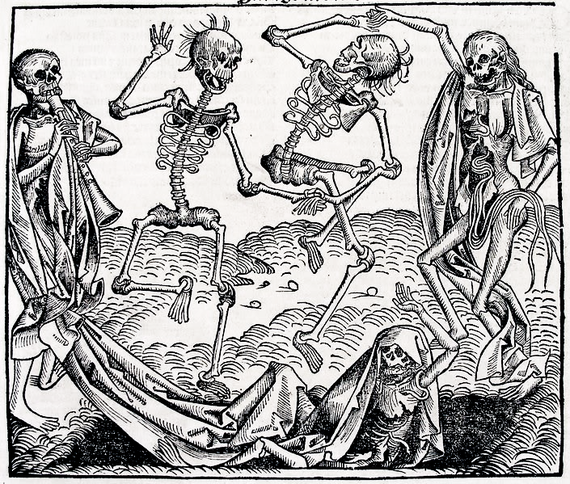
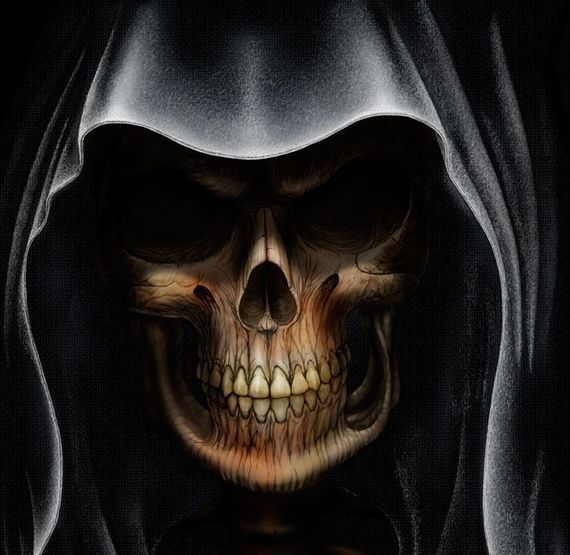

Notice that they are black and white images of skulls, skeletons, crossbones, and the Grim Reaper. These images originated in the 1300s in Europe when the Black Plague wiped out 50 percent of the population. They were sketched by people then who pinned them to their clothing in an effort to fool Death into passing over them, thinking they were already dead. What kind of feelings do these images evoke in you? For most, it is the kind of fear that makes us avoid death “like the plague.” Yet, no one gets out of here alive. When we run away from those things we find uncomfortable or are downright terrified of, we never learn how to face our fears and strengthen our capacity to move through the trials and tribulations that simply come with the territory of being alive.
This avoidance of death has evolved into a resistance to all forms of pain and suffering and the illusion that a “good” life or a “good” death is devoid of suffering. Yet, if we stop to think about it, some of the greatest treasures of our lives have come through some form of suffering. Our pain and suffering often draw us closer to one another giving us the opportunity to demonstrate and deepen our love through acts of compassion, kindness, and caring. In order to meet our life’s challenges, we enter into them rather than running away from them and find that we are strengthened and learn to build our character and fortitude.
There are other ways of seeing death that reflect a different kind of relationship to dying and death and thus an alternative response to fear. Consider this set of images from an Internet search of the phrase “Near Death Experience.”
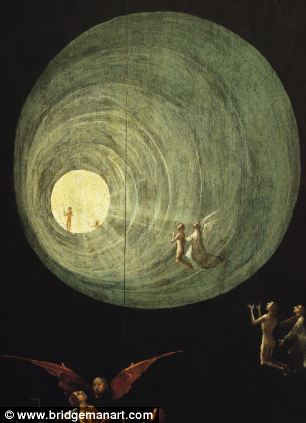
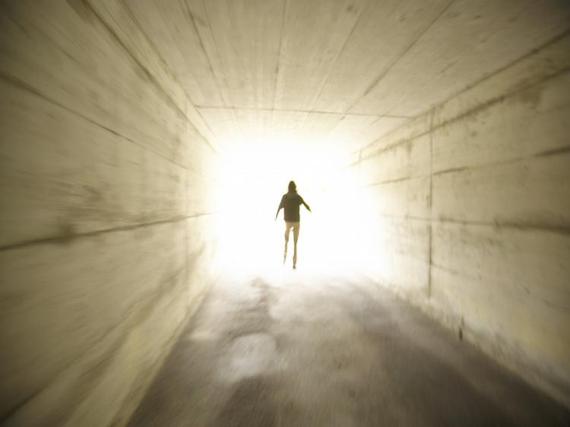
What do these images suggest? What kind of feelings do they evoke in you? Notice the hint of pastel colors, the beckoning light, and the sense of some part of us rising up from our dead body. These images also suggest the unknown or unknowable quality of death, but not in a fearful way. It is more of a sense of transition into something or somewhere else. If you live in fear of death, consider the possibility of what it would feel like had you been “brainwashed” with images like these.
Another consideration contrasting these two sets of images is that the “Death” images imply that death is the opposite of life – ie you are either alive or dead. The “Near Death Experience” images suggest a cycle of transformation where death is the opposite of birth, set apart by life. In other words, “we” are born, we live, we die, we are reborn, we live, we die, etc. It is interesting to note that when I first did this image comparison about six years ago, there was no overlap of these images. Yet, today, I found images of moving into a tunnel of light among the “Death” images. This is new and encouraging news about our renovation of the culture of death in America.
If we are more open-minded and have a healthier concept of death, then we are likely to also have a far different way of responding to suffering. Some believe that suffering can be better understood within the context of karmic accretions (both positive and negative) from the past (both within this life and previous incarnations) that are being balanced as we experience the fullness of life. In this understanding, we are not so concerned with what looks and feels good as with what is beneficial and productive to our journey through life. There is an implication that we are doing some kind of important inner work that belies the understanding of our small, personality selves.
Looking at the pain and suffering of living and dying within this context suggests that a “good death” for example might not be the one that looks peaceful and isn’t messy, but rather the one that accomplishes what that soul needed to have happen to complete its work in this lifetime. For some, this might be attractive, while for others it might be extremely difficult to endure or bear witness to. Who are we to judge? Being open to the fullness of living and dying allows us to take advantage what life has to offer and as Mavis Leyrer advises, “Life’s journey is not to arrive at the grave safely, in a well preserved body, but rather to skid in sideways, totally worn out, shouting ‘Holy shit, what a ride!'”
If you would like to know more about me and my work, please explore my website here.
Also, if you know anyone who might get value from this article please email or retweet it or share it on Facebook.
Do You Have ‘The Little Blue Book’ in Your House?
If you are wondering what I’m talking about, it is for you that I am writing this blog! Here’s the bottom line: We were all born one moment of one day, and each of us is going to die one moment of another day — we just don’t get to know when that will be. For some of us, that is a major source of anxiety. Furthermore, we live in a society that has kept us in the dark about what to expect when we, or someone we love, dies. This absence of knowledge not only makes us ill-prepared to face death, but it feeds our fear of death, which in turn diminishes our enjoyment of life.
It is perfectly normal to have some anxiety or fear about death, and in fact, most death-related anxiety is actually about the process of dying rather than about being dead. That’s where the little blue book comes in — this little 14-page blue booklet gently, kindly, and in a matter-of-fact manner explains the dying experience in such a way that it brings its readers great comfort. So why not reach for that comfort sooner rather than later? Why live with death anxiety on autopilot in the background of your mind? Why wait and find yourself called to the bedside of a dying loved one unprepared for what you will encounter and not knowing what to do?
Most people working in the field of dying, death, and grieving know about “the little blue book,” as it has come to be known. Many hospice and palliative care organizations around the country give this book to their dying patients and their loved ones to ease them through the dying experience. It is entitled Gone From My Sight: The Dying Experience and is written by Barbara Karnes, RN, who was one of the pioneers of the hospice movement in this country in the early 1970s. To learn more about Barbara and her work, visit her website at https://www.bkbooks.com. Barbara’s other three titles are: The Eleventh Hour: A Caring Guideline For The Hours To Minutes Before Death (my personal favorite), My Friend, I Care: The Grief Experience, and A Time to Live: Living with a Life-Threatening Illness. All are available on her website.
This blog is not meant to be an advertisement for Barbara and her work, but rather I am shouting from the rooftops to spread the word that each and every one of us has the opportunity to prevent the needless suffering that our fundamental ignorance about the dying process brings. Not knowing what is normal and what the signs of the end of life are, we often cling desperately to life, relying on physicians to come up with a pill or procedure that will prolong our lives. Sometimes this is reasonable, but often the dying and their loved ones simply lack the understanding of the dying process that would enable them to consider the relative wisdom of further medical interventions or the timing of opening the door to palliative care.
Those of us who work in the field of dying, death, and grieving have satchels of stories about the ways people suffer unnecessarily through their own death or at the bedside of a loved one. Not knowing what to expect, what is normal, and how to support and comfort a loved one who is dying makes us ill at ease which detracts from a tranquil environment for the dying.
As someone who writes often about dying, death, and grieving, I am quite passionate about the need for a basic education of the general public about this topic. That’s why I would go so far as to say that if I were queen of the world, I would make Barbara’s books required reading for everyone and as important as a fire extinguisher to have in your home!
The vast majority of us will die of old age and/or prolonged illness. Having Barbara’s books on hand when you or a loved one begins the end of life’s journey empowers you all to do your very best to provide a loving, comforting, and supportive sendoff. Rather than worrying about what you should or shouldn’t do, what’s normal and what isn’t, and how to be the greatest comfort to your loved one, empower yourself with some basic education and serve as an example to others. Sitting at your dying mother’s bedside, when you know that what you are observing is normal, you can encourage her and let her know she is doing a great job of dying. In this case, a little knowledge is a very powerful, wise, and comforting thing.
If you would like to know more about me and my work, please explore my website here.
Also, if you know anyone who might get value from this article please email or retweet it or share it on Facebook.
The Importance of Awakening Your Inner Spiritual Authority
I was raised Catholic by a Catholic mother and a Lutheran father and lived in a community where I had a lot of Jewish friends. That was my world view as far as religion was concerned: Catholic, Protestant and Jewish until my mother gave me a book one Christmas — about the world’s great religions — that opened my mind up to a world beyond my immediate circumstances.
I was taught that one of the motivations for being “good” was that when you died, you would go either to Heaven, Hell or Purgatory. Those who went to Heaven would be with God, those in Hell spend eternity with the Devil and the in-between cases, who needed some more purification before going to Heaven, would go to Purgatory. My mind as a child accepted the logic of that as abstract as it was.
It was Limbo that bothered me because those who were not baptized in a Christian faith were considered to have not had the stain of original sin removed from their souls and would therefore spend eternity in Limbo with no chance of ascending to Heaven. I remember being deeply bothered by this because it meant that none of my Jewish friends or their families could ever, ever be with God. That made me very sad, and while I never told them so, I felt very sorry for them. I imagined Limbo to be somewhere up in the clouds and filled with hammocks that inhabitants occupied for eternity — which certainly seemed better than Hell, but hopeless.
This was the only teaching I ever had on the subject of what happens to us when we die until my 30s when Buddhist teachings about life and death started showing up in bookstores. Instinctively, I resonated with the concept of reincarnation and our essential identity as souls. I began to develop an eclectic spirituality as I awakened a sense of the truth that lived within me. In the process, I stopped practicing Catholicism and found a different path of spiritual nurturance.
I confess to being outraged when I read a tiny news item in 2007 claiming that the Roman Catholic Church eliminated the concept of Limbo because it “reflected an unduly restrictive view of salvation.” What? What about all those souls hanging out in hammocks for all these centuries? What happened to them? Was there a relocation program? Or were they never there in the first place? How do you erase a concept that you have preached as truth to millions of people without so much as an apology for messing with our worldview all these years? Why was this taught in the first place? What other parts of the Catholic Church’s interpretive doctrine or that of other religious organizations should people be careful about blindly accepting? It’s not as with science where a newly discovered fact negates a previous theory about the world we live in.
For me, this raises a critically important issue for all believers of all religious and spiritual traditions. On the one hand, I think that leaders of any religious/spiritual tradition should hold themselves accountable for clearly distinguishing between fact and leaps of faith. There should be a warning label or blanket disclaimer that simply states, “this is what we believe to be true.” I think personal discernment should be encouraged rather than shunned as indicating a lack of faith. On the other hand, I believe that ultimately each of us must wrestle with our own inner awakening of what we believe to be truth — not because someone else told us so, but because we have taken it upon ourselves to find and embrace a deeper sense of meaning regarding matters of God and the meaning of life and death. It’s easy to unconsciously and blindly follow teachings presented by others — especially when we are children and our parents — our Gods — tell us what is true. But eventually, it is our personal responsibility to take over authority for what we choose to follow as truth. In the realms of religion and spirituality, many of us are innocent babes in the wood. We deserve to be guided with the utmost care.
If you would like to know more about me and my work, please explore my website here.
Also, if you know anyone who might get value from this article please email or retweet it or share it on Facebook.
Advance Healthcare Planning Part One: Not Just for Old People
There’s been a big push in recent years to educate the public about Advance Healthcare Planning (AHP). The focus has been primarily on the forms you need to fill out and why they are so important. But, there is so much more to it than filling out forms that is far more important and will be discussed in Part 2 of this article. For now, let’s focus on what Advance Healthcare Planning is and who needs it.
Advance Healthcare Planning is about providing clear and convincing evidence of your wishes in the event of a life or death health crisis when you are unable to speak on your own behalf. Here’s how AHP works. The legal requirements, forms, and recommendations for expressing your wishes are regulated by each state and vary from state to state. There are lots of great websites that will let you know what is required in your state. One of my favorites is http://www.caringinfo.org. It provides extremely clear information about AHP, what you need to know, and provides downloadable forms for each state. If you are someone who spends a significant amount of time in a second or third state, such as many “snowbirds” do,” be sure to fill out forms for both states and carry them with you when you travel. This is important because not all states have reciprocity with one another.
Generally speaking, there are two documents involved. The first is a Healthcare Proxy, which is a legal document in which you empower someone else to speak on your behalf regarding end-of-life health care. The second is a Living Will, which is not a legal instrument, but is intended for the purpose of giving specific information about what kinds of life sustaining treatments you do and do not want. Unfortunately, most of us have been presented with these documents as part of a package of forms that we are filling out with our attorney as part of our estate planning or we are asked to fill them out when being admitted to the hospital. As a result, we rarely understand their full implications and intricacies and fill them out in a rush.
Now, let’s look at who needs a health care proxy and a living will. The answer is simple — every adult who is mentally competent. I know, most people think you don’t need to worry about this stuff until you are old, but the reality is you don’t have to be old to die. Death and health tragedies happen every single day to healthy young people texting in cars, drinking and driving, on the football field, in domestic disputes, and innumerable other ways. For example, we have a new baby in our family who was just named after his mother’s brother who died at the age of 17 in a bizarre car accident.
Dealing with these realities is hard in a society that perpetuates a death taboo that makes us not want to think about, talk about, or deal with the realities of aging, dying, and death. However, educating ourselves about these normal parts of life and taking responsibility for ourselves by living with our affairs in order is a matter of personal responsibility. Plain and simple, there are two great reasons for tending to your advance health care planning. First, it is the only way to make sure that your voice is heard if and when a health crisis arises and you are unable to speak for yourself. Second, it avoids family trauma and squabbling over what should or shouldn’t be done for you in time of crisis. So, if you don’t yet have your advance health care plans in order, what possible good reason do you have? Please, please, please make this an urgent priority. And, please read Part 2 of this article, which will provide lots of the ins and outs and intricacies of how to really make sure your advance health care plans work for you.
If you would like to know more about me and my work, please explore my website here.
Also, if you know anyone who might get value from this article please email or retweet it or share it on Facebook.
Is Death the End Or Is There Something More?
No doubt, most of us, if given the choice, would prefer to die peacefully in our sleep with no unfinished business with ourselves or others. This we call “a good death.” But it is important to look below the surface of this idea to understand its misconceptions.
The culture of death in the United States is beginning to get a much needed renovation. We have all been brainwashed for far too long by a death taboo that immigrated to our shores from Europe and has dominated our conception of death ever since. In my upcoming book, Shining Light on Dying and Death, I explain the causes, dynamics, and consequences of this death taboo and how it has handicapped us from having a healthy relationship with death. Readers are then engaged in a process that gets them out from under its influence.
Consider the following images representative of an Internet image search of the word, “Death.”
Notice that they are black and white images of skulls, skeletons, crossbones, and the Grim Reaper. These images originated in the 1300s in Europe when the Black Plague wiped out 50 percent of the population. They were sketched by people then who pinned them to their clothing in an effort to fool Death into passing over them, thinking they were already dead. What kind of feelings do these images evoke in you? For most, it is the kind of fear that makes us avoid death “like the plague.” Yet, no one gets out of here alive. When we run away from those things we find uncomfortable or are downright terrified of, we never learn how to face our fears and strengthen our capacity to move through the trials and tribulations that simply come with the territory of being alive.
This avoidance of death has evolved into a resistance to all forms of pain and suffering and the illusion that a “good” life or a “good” death is devoid of suffering. Yet, if we stop to think about it, some of the greatest treasures of our lives have come through some form of suffering. Our pain and suffering often draw us closer to one another giving us the opportunity to demonstrate and deepen our love through acts of compassion, kindness, and caring. In order to meet our life’s challenges, we enter into them rather than running away from them and find that we are strengthened and learn to build our character and fortitude.
There are other ways of seeing death that reflect a different kind of relationship to dying and death and thus an alternative response to fear. Consider this set of images from an Internet search of the phrase “Near Death Experience.”
What do these images suggest? What kind of feelings do they evoke in you? Notice the hint of pastel colors, the beckoning light, and the sense of some part of us rising up from our dead body. These images also suggest the unknown or unknowable quality of death, but not in a fearful way. It is more of a sense of transition into something or somewhere else. If you live in fear of death, consider the possibility of what it would feel like had you been “brainwashed” with images like these.
Another consideration contrasting these two sets of images is that the “Death” images imply that death is the opposite of life – ie you are either alive or dead. The “Near Death Experience” images suggest a cycle of transformation where death is the opposite of birth, set apart by life. In other words, “we” are born, we live, we die, we are reborn, we live, we die, etc. It is interesting to note that when I first did this image comparison about six years ago, there was no overlap of these images. Yet, today, I found images of moving into a tunnel of light among the “Death” images. This is new and encouraging news about our renovation of the culture of death in America.
If we are more open-minded and have a healthier concept of death, then we are likely to also have a far different way of responding to suffering. Some believe that suffering can be better understood within the context of karmic accretions (both positive and negative) from the past (both within this life and previous incarnations) that are being balanced as we experience the fullness of life. In this understanding, we are not so concerned with what looks and feels good as with what is beneficial and productive to our journey through life. There is an implication that we are doing some kind of important inner work that belies the understanding of our small, personality selves.
Looking at the pain and suffering of living and dying within this context suggests that a “good death” for example might not be the one that looks peaceful and isn’t messy, but rather the one that accomplishes what that soul needed to have happen to complete its work in this lifetime. For some, this might be attractive, while for others it might be extremely difficult to endure or bear witness to. Who are we to judge? Being open to the fullness of living and dying allows us to take advantage what life has to offer and as Mavis Leyrer advises, “Life’s journey is not to arrive at the grave safely, in a well preserved body, but rather to skid in sideways, totally worn out, shouting ‘Holy shit, what a ride!'”
If you would like to know more about me and my work, please explore my website here.
Also, if you know anyone who might get value from this article please email or retweet it or share it on Facebook.