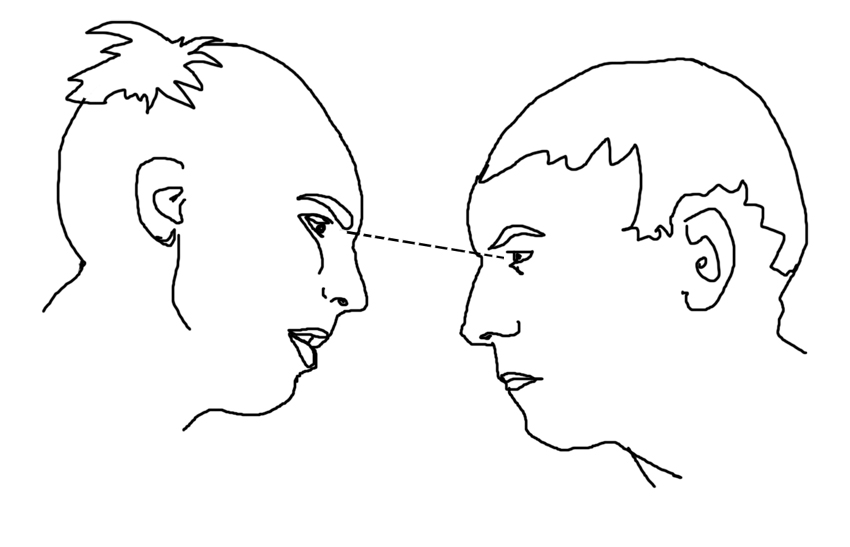
Many languages and cultures carry the same wisdom: “Do unto others as you would have them do unto you.” One would think that is always good advice. However, there are two fundamental assumptions in The Golden Rule that require a note of caution in its application.

Consider the following situation. Several years ago, I was working with a client who was in an abusive marriage. She was very clear that she wanted to leave her husband and needed to do so. But, she just couldn’t do it. When we explored why, it turned out to be attributable to her deep belief in The Golden Rule. Her interpretation was that her husband was unemployed, fairly unemployable and generally down on his luck and if she was in his shoes, she certainly would not want her spouse to leave her. While enormously compassionate, she was still being abused.

Her literal interpretation of The Golden Rule blocked her from seeing the full picture of what was going on. The reality was that if she was in her husband’s position, she would not behave as he was behaving. He was one of those downright nasty people who took pleasure from manipulating and hurting other people and making his life challenges other people’s problems. Somehow, it gave him a sense of being superior.

The first caveat to The Golden Rule is that it must be applied to one’s self first and then to others. In other words, do onto yourself as you would have others do onto you. If you extend your loving kindness to others at your own expense, then you become your own abuser. Put another way, if there is a conflict between treating yourself and the other person with loving kindness, it is wise to take care of yourself first so that you can come from a position of strength and balance in being of service to others.

I learned this wisdom when I was ordained. The charge of my ministry was to first minister to myself, not in a selfish way, but rather as a loving parent tends to the needs of a child. The ministry then extends to others. It took me many years to appreciate the wisdom of making sure I was maintaining my own health and balance so that I could relate to others in a more loving way without doing so at my own expense.

Here’s how the first caveat applied to my client. She was so focused on how she was treating her husband that she neglected to look at how she was behaving towards herself. She was allowing herself to be abused continuously. When I shared the first caveat with her, she recognized that she was allowing herself to be abused by ignoring her responsibility to herself and focusing only on how she would feel in her husband’s shoes — completely unaware of the fact that she would never behave as he did. Just as repeatedly burning your hand by placing it over a flame is unwise, so is opening the door to repeated abuse.

The second caveat is the assumption that you are dealing with a healthy person of integrity. Sometimes you are not. When someone is in such an unhealthy place in their consciousness as to be repeatedly abusive to others, the most loving response for one’s self and the abuser is often to leave or refuse to engage in an adversarial response. This refusal to support the abuser in his or her weakness can be the wakeup call needed. Our most loving behavior is often to refuse to tolerate abuse.

The bottom line is that we all want to be loved by each other, but sometimes we lose sight of that and treat one another in terrible ways. The way I interpret The Golden Rule is not that we are supposed to turn the other cheek by inviting more abuse, but rather serving one another by example. Figuratively, we can turn the other cheek by not responding to aggression with aggression but with what we truly believe is for the highest good of all concerned. For example, when my client left her husband she wrote him a long and loving letter in which she affirmed her love for him, wished him well, encouraged him to get help and made it perfectly clear that the marriage was over and that it was time for her to look after her own health and well-being.

For me, the message of The Golden Rule is to treat each other with loving kindness. Sometimes this means demonstrating our unwillingness to meet aggression with aggression by choosing not to participate in what others are dishing out.

If you would like to know more about me and my work, please explore my website here.

Also, if you know anyone who might get value from this article please email or retweet it or share it on Facebook.


Many believe that the highest expression and experience we can attain in life is to love one another. Yet love is highly misunderstood. There is great confusion about the causation of love and the ways in which we are one and those that separate us.

When we “fall in love” with someone, it is often experienced as an instant affection for them — almost a chemical occurrence. One minute it didn’t exist, and the next it seems to exist more than anything else. It is delicious and we want more, so we focus more and more of our attention on this one person and want them to do more and more of whatever we think caused us to have this experience. What we commonly refer to as “love,” whether as lovers, parent and child, or friends, is really a very spiritual experience that we mistakenly delimit to our relationship with the person with whom we are having this experience. In fact, love is the human experience of the divine. As John-Roger explains it:

As we are looking for ourselves, we often see ourselves in others who are open to reflect. We then love them, not just for who they are, but for that reflection of our love in them. What we’re really saying is, “When I’m with you, that place inside of me that is loving awakens.”

When this kind of love is experienced between two people, four things are happening simultaneously. Each is choosing to give love to the other, and each is choosing to receive love from the other. We are both open to the flow of giving and receiving love. At its best, when none of these four actions is blocked by self-imposed limitations, whether with one’s partner or a total stranger, there is a transcendent experience into a oneness that is beyond earthly concerns. Consider the awe when a parent first looks into the eyes of his or her newborn child, or when in “Avatar” the Na’vi say, “I see you,” meaning, “I see the god in you.”

When we don’t realize that love is a recognition of the divine through another, we falsely attribute the source of love simply to that person. We might fixate on wanting more of that person when in fact what we really want is more experiences of transcendence, of God. Attributing the source of love to the other person is simply a misunderstanding of the causation. When we limit ourselves to looking only for romantic love, we miss the point.

Building upon that misunderstanding of the true nature of love, we zero in on that one person and attempt to stimulate those loving feelings. We develop a conscious and often unconscious agenda of wanting them to behave in ways that we believe are the cause of our transcendent experience. When we take this path, our love often becomes exclusionary and conditioned by our personal preferences and prejudices. Our love flows exclusively with this person but not with others, and we tend to trap each other in a web of expectations. When we look for love on websites, we want our prospective partner to be of a certain age, to have a certain body type and to share our likes and dislikes — all the things that we think will bring us to that transcendent experience. We think that if they are a match, they will be capable of igniting those feelings in us.

Truly loving another person with a capital “L” is a matter of freeing the other person of the responsibility to express his or her love for us only in the ways that we want to receive it. When we truly love, we get out of our own way by dropping all the concerns of our ego and allowing the pure radiance of the divine to shine through us to another. When the other person does that as well, the result is a pure and blissful experience of our own divinity reflected through another into a shared oneness.

I think we should all strive to be ambassadors of love with a capital “L” with as many people as possible, through our willingness to smile at a complete stranger as an offer of momentary transcendence as we pass each other by on the street; by calling to be of service to a friend who is facing a difficult time; and by choosing to sacrifice our petty judgments, expectations and any other ways that we have learned to withhold our loving kindness from others each day. It is a practice of becoming a safe and neutral place in which both our humanity and our divinity can dwell. It is through these actions that the place inside us that is loving awakens.

Perhaps this is truly what is meant in Matthew 18:20: “For where two or three are gathered together in my name, there am I in the midst of them.” We experience God’s presence in the context of our everyday relationships with others. It is a reflective process. When we delight in another, what is actually happening is we are having a pure experience of oneness that transcends all our judgments and our demands that another person be how we want them to be. We have raised our consciousness up above earthly considerations, and that is indeed a divine experience.

If you would like to know more about me and my work, please explore my website here.

Also, if you know anyone who might get value from this article please email or retweet it or share it on Facebook.

Most couples want a wedding ceremony that speaks to their unique values, beliefs and life circumstances, but beyond a few inspired ideas, many are at a loss about how to put it all together. Having designed and officiated at hundreds of wedding ceremonies, here are my 10 top secrets to creating the ceremony of your dreams:

1) Remember that the ceremony is a sacred ritual and the most important part of your wedding day.

The marriage ceremony is rich with traditions that cross cultural boundaries and date back to ancient times. If a contemporary marriage ceremony does not include this sacred dimension, it runs the risk of being little more than the creation of a legal union. Like digging a well to tap into the aquifer, a ceremony that draws upon the sacred dimension connects a couple into the mystery of two becoming.

2) The wedding ceremony is a theatrical production and you are the producers/directors.

A seamless wedding ceremony is a carefully choreographed production. This theatrical dimension requires balancing the creation of a meaningful ceremony with careful attention to the details. Thinking everything through ahead of time and having a thorough rehearsal allows the members of the wedding party to confidently perform their parts, which will make the ceremony appear effortless to your guests.

It’s important that you take charge. If you have advisors, let them guide you through what decisions need to be made and what your alternatives are, but don’t let them make decisions for you. Even when you have a bridal consultant, be sure that all decisions affecting the ceremony are made by you.

3) A great ceremony strikes a balance between personal expression and tradition.

The rules governing the content of a wedding ceremony are those of the church and state. Religious traditions have their own specific way of performing the wedding ceremony and may not be open to the idea of personalizing the ceremony for individual couples. State laws specify such things as the minimum age for brides and grooms, the need for a qualified officiant, and the speaking of vows in front of witnesses.

When a couple is getting married outside the auspices of a particular religious tradition, they are free to customize their ceremony as long as they honor the laws of the state where they are getting married.

Creating a wonderful ceremony is a matter of balancing the opportunity for expressing your uniqueness with the comfort of the common ground of tradition. Going too far in one direction or the other creates a ceremony that is memorable for all the wrong reasons.

Be careful not to throw away all the elements of tradition. For example, when presenting ceremonial elements in my book, “The Wedding Ceremony Planner,” I chose to loosely follow the structure of the wedding ceremony found in the Book of Common Prayer, since eighty percent of Americans are Christian. That is why this common root of Christian wedding ceremonies is so familiar to most people. It also provides a logical sequence of events that allows the ceremony to reach crescendo with the sharing of vows, the ring exchange, the final blessing, pronouncement, and the kiss. I recommend that couples put their signature on their ceremony in the content of the elements they choose to include rather than in their sequencing.

4) Make sure you and your ceremony officiant have a comfortable working relationship.

The role of the officiant in a traditional religious ceremony is governed in large part by the rules of that religion, while interfaith and ecumenical ministers have much more freedom to customize your ceremony with you. Remember that you get to choose who marries you, and it is very important that you have a comfortable working relationship with him or her. Our job as clergy is to guide you and to serve you, and some of us do a better job of that than others.

It is not uncommon for couples to be intimidated by members of the clergy. We have personalities, and strengths and weaknesses in how we perform our jobs, just like everyone else. You are entitled to an officiant who cares about you and wants to help you to create the wedding ceremony that is right for you, even if it means he or she needs to go above and beyond the call of duty.

5) Allow your ceremony to be unique, but not a cliché.

Some couples try too hard to be unique, and end up including elements in their ceremony that are either disappointing, cliché or offensive to some of their guests. For example, one couple planned to have butterflies released during their recessional. Unfortunately, when the cardboard containers were opened, half the butterflies were dead. At another wedding, the groom, accompanied by his rock band, played a song for his bride in the middle of the ceremony. This mini jam session left many traditional guests horrified.

6) Be very clear about the time and location of your ceremony.

Some people believe that weddings never start on time. However, most couples plan the time of their reception based upon the assumption that their ceremony will start on time. Remember, the later your ceremony starts, the more time and money you will lose on your reception. It is a good idea to either be clear that your ceremony will start on time, or build in a time cushion by scheduling the start time fifteen minutes before you actually plan to begin. Just be careful not to put those who arrive on time in the position of having to wait too long.

Similarly, it is important to give your guests clear information about your ceremony location. Some couples choose locations that are aerobically challenging or simply inaccessible to elderly or physically challenged guests — including women in high heels. Be sure to include an excellent map and directions with your invitations. Also, strategically place signs, balloons or ushers to guide your guests to the wedding site. Another good idea is to provide the cell phone number of someone willing to serve as a contact person for guests who get delayed or lost. Give your family and friends the gift of a ceremony that starts on time, at a user-friendly, easy to reach site.

7) Keep it short and simple.

You can create a beautiful and memorable ceremony that takes no more than 15 or 20 minutes. In my experience, a ceremony that goes much longer than that runs the risk of creating fidgety, bored, and impatient guests. For example, you may lose the attention of your guests by including more than two readings.

8) Just breathe. Be present. Be joyful.

Your wedding ceremony is when you will first see all of your guests and they will see you. This may be a bit overwhelming or anxiety producing. I have seen many a couple come before me with terrified smiles on their faces and no air moving through their bodies. That’s when I remind them “Just breathe.” It is so simple, yet sometimes challenging for a couple to let go of all concerns so they can bring their hearts and minds present. Once they get to the altar, all the bride and groom really need to do is to look into the eyes of their beloved and just breathe and feel the joy in their hearts. What a magnificent moment in life and what a shame to miss it because you are worrying about some detail or find yourself overcome with nerves.

The greatest gift you can give yourself and each other on your wedding day is to be fully present in the loving that brought you both to this moment. You can only focus your attention on one thing at a time. So, let it be the joy, loving, and gratitude you feel to be joining together in marriage, rather than worrying about whether or not the caterer got your message about the olives. Just be fully present in your loving.

9) Remember that your wedding day has only 24 hours.

While this is one of the most important days of your life, it only has 24 hours like any other day and will come and go before you know it. The more you obsess about your wedding, the less you are likely to enjoy it. Have fun planning your special day, but don’t fall into the trap of trying to make it the most perfect and spectacular wedding that has ever existed on planet earth.

Enjoy discovering and expressing what aspects of your wedding day are truly important to the two of you as individuals and as a couple. Just remember, this is not an Olympic event. It is the celebration of your commitment to each other and the beginning of your journey together as husband and wife. Have a heartfelt and delightful day.

Don’t set yourselves up for disappointment by buying into unrealistic expectations and then falling into post-wedding depression because the day has passed and you are no longer the king and queen for the day. Your wedding day is meant to be a gathering of loved ones to witness and celebrate your union and to launch you into your life together as husband and wife. That brief 15 or 20 minutes called your wedding ceremony is what the day is all about — your entrance into the sacred and joyous covenant of marriage. Then you party, and then you have the rest of your lives together to fulfill your vows by loving, honoring, and cherishing each other.

10) Delegate, have fun, and keep your sense of humor.

Do plan ahead, paying careful attention to the details, and delegate implementation of your wishes to friends, family, and professionals. Once you have set your plans in motion, let them go. Do not carry them with you throughout your wedding day, comparing what actually happens to what was on your list. What you planned for was your image of perfection, which never actually happens. Remember to keep your sense of humor handy and to enjoy the serendipity as it unfolds. Be open to the unexpected blessings and surprises that are sure to come your way. May you and your marriage be blessed in all ways, always.

***

If you would like to know more about me and my work, please explore my website here.

Also, if you know anyone who might get value from this article please email or retweet it or share it on Facebook.

I happen to think that the singular evil of our time is prejudice. It is from this evil that all other evils grow and multiply. In almost everything I’ve written there is a thread of this: a man’s seemingly palpable need to dislike someone other than himself.
–Rod Serling

When we encounter someone who does not resonate as “just like me” we are facing a moment of profound choice. Our response reflects the deepest instinct of our heart. Unfortunately, far too many of us respond without even thinking about it, with prejudicial thoughts about the person’s race, religion, ethnicity, body, clothing, or differences in social class, sexual orientation, age or disability, or any other variation that gives us the illusion that we are better than someone else. People find all sorts of reasons to pre-judge one another, building walls of separation rather than strengthening our human community.

A recent experience I had with prejudice motivated me to write this article to call for a greater sense of accountability for how we treat one another. I just moved into a beautiful newly-built apartment in the village of my town. It is a building that houses two apartments and is designed to fit into the architectural style of this established quiet neighborhood. While waiting for the construction to be completed before moving in, I learned that 40 neighbors had signed a petition to try and block the construction. Why? They were concerned that people who rent would bring down the neighborhood. They perceived us as people of a lower class and therefore undesirable. Part of the irony here is that a dilapidated old house that was considered an eyesore was removed from this property to build this nice, new two-apartment dwelling. I feel sorry for these people that their worldview is so very small and that their hearts have so many conditions.

No matter if our response to another person is on autopilot or deeply thought out, we are responsible for how we view one another, and consequently, how we treat each other. Sad to say, most of us could use a bit of remedial attention in this area of our consciousness.

It is one thing to have a preference, but quite another to be prejudiced against someone by rejecting him or her for being different. If we could just bring our consciousness present to the moment of our reaction, we might see that instead of stepping into a judgment of another as “less than me” or undesirable because they are different, we have the opportunity instead to step into gratitude for the abundance and grace that we perceive ourselves to have and to be gracious to the other person. Ironically, our choice says everything about us and really nothing at all about the other person. It is a matter of whether the door of our consciousness is open to variations on the theme of what it means to be human or shut because we are threatened by dissimilarity.

I think that when we look below the surface of any prejudice we find insecurity and fear. Prejudice says far more about the one who prejudges than it does about the one who is being judged. It tells us the one who judges is compelled to put someone else down to feel elevated. It tells us that the one who judges is scared of being how the other is perceived to be. It tells us that the one who judges attaches much value to his or her own relative stature and that this stature is an essential ingredient of his or her sense of self worth.

No matter what form it comes in, prejudice boils down to creating a hierarchical separation between yourself and someone else. Whether rejecting the other or preserving your own status, the net result is separation. As Judith Light says, “Bigotry or prejudice in any form is more than a problem; it is a deep-seeded evil within our society.” Not only are we responsible for the consequences of our attitudes, but our children either learn and absorb prejudices from us or become prejudiced against people like their parents, and the cycles of judgment go round and round. Wouldn’t it be smarter for us as individuals and collectively as a society to teach ourselves and our children:

  • To develop a healthy curiosity about the differences between people;
  • To understand that most of the ways in which we differ are out of our control;
  • That being different isn’t right or wrong — it’s just different;
  • To enjoy the variations on the theme of being human;
  • To be compassionate and charitable toward those who are actually less fortunate than we are;
  • To expand rather than to contract when faced with differences;
  • To develop the ability to discern the distinction between differences that are simply interesting and those that might merit some careful consideration.

Personally, I don’t think it would be much fun or very interesting to live in a world where everyone looks the same, earns the same amount of money, is culturally and ethnically the same, has the same level of intelligence, sexual orientation and body weight. Boring! I like our differences. But, I don’t like how ubiquitous prejudice is in our society. We seem to accept and tolerate it as though it were a normal way to be. Even for those of us who call ourselves “spiritual” or “a good person” it might be wise to take stock of our own behavior around prejudice. Do you experience prejudicial reactions to any individual or group of people? If so, are you willing to make the effort to change that by choosing a path of kindness that respects the dignity of all people? Einstein said “It is harder to crack a prejudice than an atom.” That may be so, but the benefit to us, to those we judge, to our society and future generations is well worth the effort. Let’s learn to be intolerant of our own intolerance.

If you would like to know more about me and my work, please explore my website here.

Also, if you know anyone who might get value from this article please email or retweet it or share it on Facebook.

Below the surface of many family holiday gatherings are mini dramas playing out, contemporary grudges and resentments and unresolved childhood issues. Nothing hurts with such emotional depth as these familial battles. For the tender-hearted, this can be a psychological mine field while self-righteous bullies reign unchallenged. Many silently suffer through these events while dutifully and unconsciously assuming their childhood role as the family black sheep or underdog. Those in secondary roles are often either complicit or oblivious, leaving the underdog to fend for his or herself. Here are seven strategies for doing it differently this year.

Strategy 1: See it for what it is. The bottom line of these battles is that they are mere reflections of the level of consciousness of the participants involved. Most bullies and tyrants have failed to evolve psychologically past their childhoods and are simply functioning out of a juvenile state of consciousness. Typically, they are caught in a win/lose mentality that drives them to perceive themselves as a winner at the expense of someone else. Putting you down is driven by a desperate attempt to put themselves up. In this sense, you are simply a means to an end and their attack on you is really nothing personal. You cannot evolve another person’s consciousness for them. Any attempt to address the matter head on with them will simply further ignite their battle position. On the flip side of this, is there any merit to the accusations and judgments lodged against you? If so, are you willing or able to change? If so, only do so for your own highest good and not to seek the approval of others.

Strategy 2: Stay conscious in the present and study how the dynamic works. Remember, it takes two to tango. Play detective with the situation and notice how this other person gets to you. Is it through sarcastic remarks? Giving you the silent treatment? Disdainful looks? Just how do they communicate their rejection and judgment of you? How do they hook you into their game? Pay attention to your own behavior as well. Do you comply by feeling and behaving like a victim? Do you try to defend yourself against their attacks? Does this drama dominate your entire experience? How do you buy in to this other person’s point of view?

Strategy 3: Stand tall in your own integrity and truth. Be at the cause of your own behavior rather than at the effect of others. Stop behaving in relationship to this person. Don’t buy into the familiar emotional territory of your childhood. Be your own grown-up person. Stop focusing on them and focus on yourself. Be who you know yourself to be rather than jumping into the underdog or black sheep costume of your childhood. Get out of reactionary mode and simply be yourself. By moving your attention away from the bully, you stop feeding on or into the situation.

Strategy 4: Stop wanting or expecting the other person to change. Before entering the situation, psyche yourself up. Remind yourself that this other person is probably never going to change his or her behavior toward you. Make your consciousness big enough to let that happen without being the center of your attention. Make peace with it. Let it be so without trying to change it in any way. Focus instead on learning how to stay true to yourself in the presence of someone who belittles you. Stop giving them your power. Remember that both of you have the freedom to choose how you will behave. Take the high road and don’t expect them to join you.

Strategy 5: Practice forgiveness. If you find yourself having a hard time with the situation, launch yourself into forgiveness mode in the privacy of your own mind. Forgive yourself for judging yourself for any judgments you have against yourself or the other person. Keep doing this as judgments come up. Neutralize them with forgiveness. If you don’t really feel the forgiveness, do it anyway — fake it till you make it.

Strategy 6: Step free of the drama and choose to have a healthy, good time. Setting and holding to the intention of doing it differently goes a very long way. Choose out of the drama and into having an authentically good time. Give more of your attention and interest to other people at the gathering. Help out in the kitchen. Just find some way to do it all differently. If you typically sit in a corner, get up and mingle. Find a buffer — someone you can engage with to shift your focus. Just do whatever it takes to keep moving your attention away from the drama and into finding new ways to be with your family. By doing it differently, you will elicit different responses.

Strategy 7: Strike out on your own for the holidays. If your family gatherings are simply unbearable for you, don’t go! There is no law that you have to spend the holidays with your family. What does the holiday mean to you? If it is about being with your family — then figure out how to do that using the first six strategies above and evolve a place for yourself that nurtures and supports you. If the meaning of the holiday is about the deeper religious message it brings, then find other people to be with who share your beliefs. Maybe you just want to have a light-hearted time. If so, then give yourself the gift of creating that for yourself with our without other people. Take ownership of your own experience and create a happy and blessed holiday for yourself.

The holidays come and go every year. Don’t stay stuck in a bad emotional drama. The willingness to do it differently will always create the means and ability you need. Trust yourself and have the courage to step free. Happy holidays, everyone.

If you would like to know more about me and my work, please explore my website here.

Also, if you know anyone who might get value from this article please email or retweet it or share it on Facebook.

They say opinions are like noses — everyone has one. Whether you like it or not, people have opinions about you. What you do with those opinions is entirely up to you.

Consider a coaching client of mine who had a really tough time dealing with her family’s opinion of her over the holidays. On the surface everything looked fine, but she was living in her own personal hell, reliving the drama of her childhood. It seems that her brother’s life has been filled with one notable mainstream success after another — the stuff of which parents are very proud. As his younger sister, my client has lived in his shadow, feeling as though she could never measure up or elicit the level of enthusiastic approval her brother generated from their parents. Now as a grown young woman whose life path is ambiguous compared to her brother’s, she is still thrown for a loop when asked “What’s new?” or “What are you up to these days?” These seemingly harmless questions evoke a cold sweat and terror for her, and the otherwise confident and delightful person she is becomes flooded with self-rejection, unable to stand in support of herself. The truth is she has a great vision, passion and plans that will take years to develop. She is doing a wonderful job of finding her way off the beaten track of the mainstream to create a new kind of school that will provide a wonderful education, caring community and magnificent opportunities for a largely marginalized segment of our population. But, that is tough to talk about enthusiastically in an elevator speech to people who measure success in terms of concrete recognizable achievements — or worse yet — don’t even care.

When a situation that is this emotionally juicy comes up in your life, it is a wonderful opportunity to gain some life wisdom. In this particular case, there is much to be learned about dealing with life in a social context where everybody is having opinions about themselves and each other all the time.

Here are the tips I gave my client. Perhaps they will help you or someone you know as well.

Tip #1: Form your own honest opinion about yourself.
If you fall apart for fear of what others will think of you, then your sense of self-worth is contingent on the opinions of others. While your truth may not be very popular, to abandon yourself is the worst possible response you could have. No matter what anyone else thinks of you, no one’s opinion of you has more power than your own. If you abandon your own ship at the least suggestion of a negative response from others, you need to be doing some deep inner work to identify your point of vulnerability so you can heal your relationship with yourself. Your attitude toward yourself has the power to define the quality of your inner and outer experiences. So if you are not thinking highly of yourself, get to work on that.

Tip #2: Check out your expectations about other people’s opinions of you.
The difference between expectations and reality is a good measurement of the amount of suffering we cause ourselves by holding unrealistic expectations. Do you expect everyone to like you and have a positive opinion of you? If so, you are going to have a lot of unpleasant experiences. It is important to develop tolerance for a variety of reactions to you and what you are doing in your life. If you are walking a mainstream path of success like my client’s brother, you are likely to get lots of positive reactions and not have too much trouble in this area. If you know yourself to be a good person, value that knowledge more than the vicissitudes of the opinions of others.

Tip #3: Develop a great elevator speech.
The fact is, polite conversation is not typically all that deep. When someone asks you how or what you are doing, consider the source of the question. Is this someone who really wants to know the depths of your growing edges or are they simply being polite? A good place to start your response is with a terrific elevator speech. In 30 seconds to two minutes, you want to get your point across with confidence and enthusiasm. If your message is “I’m at Harvard Medical School and I love it,” you are likely to get a wonderful response from just about anyone. However, if your path, like that of my client, is more of an exploration without having reached a notable destination yet, it might take a bit more effort to develop an effective elevator speech. Play with this and learn to by your own best public relations person.

Tip #4: Remember that most of communication is nonverbal.
If you are falling apart trying to answer the simple question of “How are you doing?” then most likely a major nonverbal communication has already taken place before you even open your mouth to respond. Consider your nonverbal communication in terms of your body posture and gestures, voice tone, eye contact or lack thereof, etc., as well as what feeling you are getting from this other person. Let these clues guide you in your verbal response. If necessary, find a way to make a quick exit and go to the bathroom or somewhere else where you can pull yourself together.

Tip #5: Pay more attention to your inner dialogue and what button in you the other person pushes.
Learn from your own behavior. Play detective within yourself to figure out what your point of vulnerability is and get to work on it. Remember these emotional buttons we have that other people push are simply pointing out to us where we need to do some inner work.

Tip #6: Smile and change the subject when you have said what you want to say.
A nice smile goes a very long way. Learn to be a clever conversationalist so you can steer the conversation away from areas that are difficult for you. Celebrate who you are and don’t let others rain on your parade.

If you would like to know more about me and my work, please explore my website here.

Also, if you know anyone who might get value from this article please email or retweet it or share it on Facebook.

Did you ever have a really good friendship where everything was just rolling along until one day you hit an impasse that you couldn’t seem to get past? I’ve been hearing a lot of stories like this lately and have had my fair share as well. So let’s take a look at what could be happening and the options for resolution.

Many of us suffer from the faulty assumption that others — particularly those we befriend — are “just like me.” We think that because things go smoothly between us they must therefore think like us, process their emotions like us, and share our most cherished beliefs and values. Not so! And therein lies one of the biggest challenges in friendships. Coming to terms with the “otherness” of your friend — especially those parts you find undesirable — can be the hardest, yet most rewarding part and the source of some of life’s greatest lessons.

I’ve learned that when a big problem surfaces in a friendship, I need to raise my consciousness above the level of “I said, they said” where I am blaming and judging one of us — usually the other person because that’s the territory of the ego. I want to lift to a higher place where I have enough altitude to see the bigger picture we find ourselves in. That’s where I can find compassion for us both struggling to find some solid ground and where it is possible to remind myself what has been good and abiding between us. That’s where I can see that we all just want to be loved and to matter to each other. When I get to that place, I can usually let go of my judgments and hurt feelings and figure out how I want to move forward in terms of the other person. It is also from this higher perspective that I can see and learn from whatever life lessons the situation has brought my way. However, it can take me a long time to get there because my ego can be quite tenacious at times.

Here are some guidelines for getting through the territory of the ego:

  1. Whatever level your discomfort is on (mind or emotions), go to the other level to work it out. For example, if your mind is saying, “She has some nerve suggesting I would ever…” then ask yourself, “How does this make me feel?” Alternatively, if you find yourself feeling really sad and bewildered by what has happened, ask yourself, “What do I think happened here?”
  2. Fundamentally, these stalemates usually boil down to hurt feelings, misunderstood motivations, or seeing something in the other person’s behavior that doesn’t fit your idea of who they are. Ask yourself which of these three you are dealing with and be ruthlessly honest with yourself about your thoughts and feelings around what has happened.
  3. Take some time to be present with yourself and pay attention to how the disturbance reverberates within you. Don’t be too quick to try to resolve the outer problem with the other person when you haven’t first figured out what is going on inside of you. Talk to yourself first before attempting to seek resolution with the other person. Ultimately, our relationships with others are reflections of our relationship with ourselves, so it is essential that we seek clarity and peace within ourselves before trying to heal the outer situation.
  4. Consider the pros and cons of talking about the situation with your friend. It’s not always the best answer. Sometimes there is just too much emotion to be able to consider the other person’s point of view yet. Talking might only polarize you further as each of you tries to force the other to see your point of view. Remember that at first we are not seeing the other person’s point of view because we can only see our own. If you need to talk about the situation to try and gain some perspective, pick someone who is neutral and doesn’t know the other person, or talk it through with a professional. Don’t talk about it with mutual friends, where you are likely to be seeking agreement rather than insight and opening up a whole new can of worms.
  5. Recognize — as humbling as it may be — that the situation is not all about you and how you think and feel. There are many levels to healing a broken friendship. Each participant goes through his or her inner process of seeking to understand what has happened and what to do about it. Usually, each is looking at the situation from an entirely different point of view within a larger context of his or her own personal and shared history. We tend to be biased in our own favor, blinded by our own way of seeing things. Yet, any true resolution requires having a large enough perspective to encompass the reality of both individuals and their respective points of view.
  6. Consider your options regarding the future of the friendship. Either it will end or limp along unhealed or evolve to a better place. You and your friend might not agree as to which fate is likely or desirable. Do your best to heal the discord that you hold within yourself and give your friend the space to do the same. You may need to take a break from each other with no definitive resolution for a while. If you do talk the situation through and agree to disagree, be careful if there is a lingering issue of trust or respect. Be honest about that with yourself and each other.
  7. Judgment is the territory of the ego and is never the ultimate answer. Challenge yourself to move past that and to seek the higher ground where you and your friend might reach into that which is stronger than your judgments and hurt feelings.
  8. If ultimately you decide to leave the friendship, let it be because you see no other way to love, honor and respect yourself moving forward. If that is your choice, go in peace wishing your friend every happiness you seek for yourself.

If you would like to know more about me and my work, please explore my website here.

Also, if you know anyone who might get value from this article please email or retweet it or share it on Facebook.